


Today, Shaun Ricci and I are launching Amp, our fourth company together. Our mission is to give every HR and Talent leader AI Teammates they can trust.
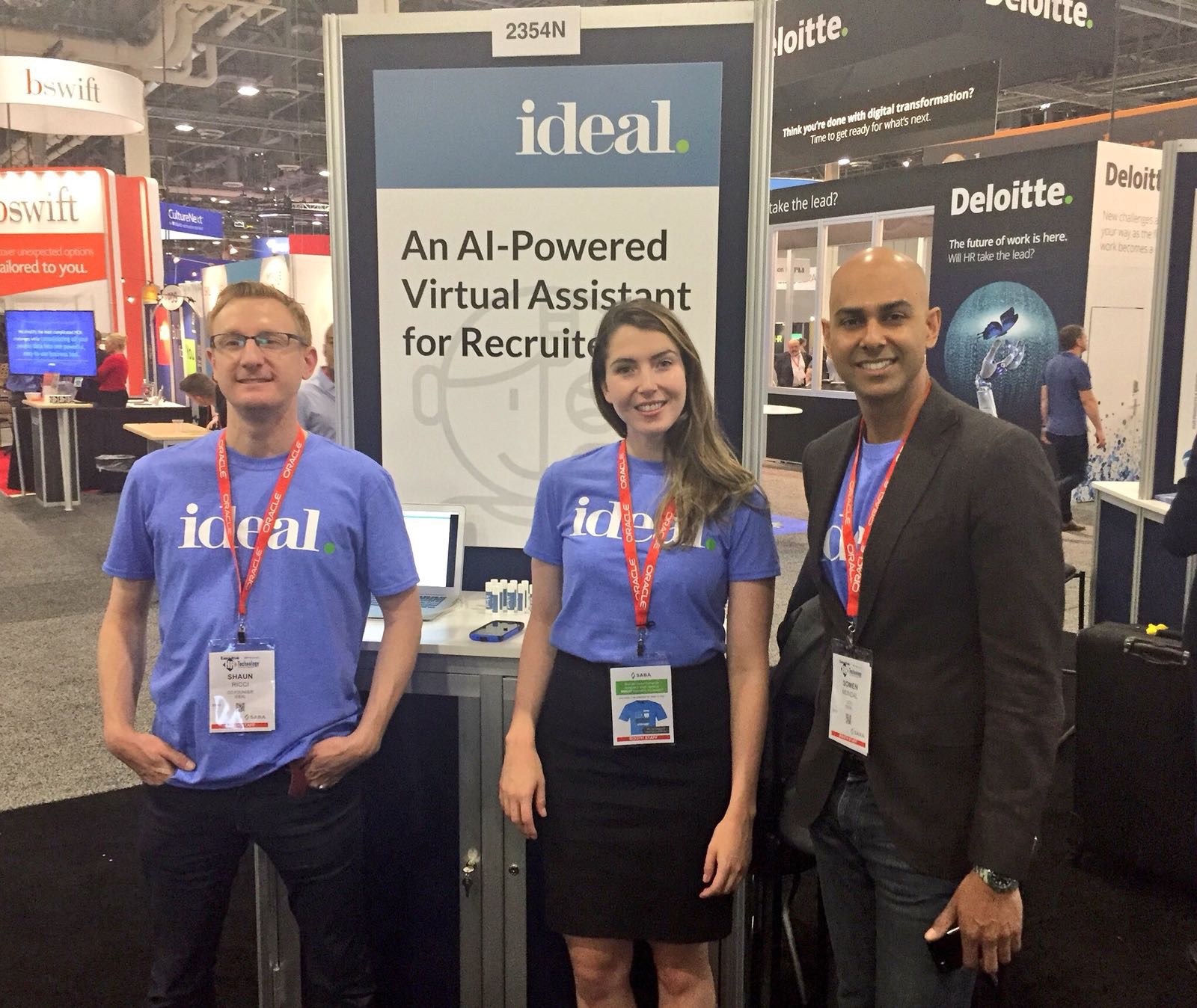
For the better part of 10+ years, Shaun and I have been building technology for HR and Talent teams. We co-founded Ideal, one of the first platforms to apply AI to talent screening and shortlisting at enterprise scale. Ideal was acquired by Dayforce, and we spent the years following the acquisition working inside one of the largest HR technology platforms in the world. That experience gave us something you cannot get from the outside: a deep understanding of how enterprise HR and Talent operations actually run at scale, where the systems of record excel, and where the gaps remain even after billions of dollars of platform investment.
What we saw, across hundreds of enterprise deployments, was a pattern that repeated itself regardless of the platform, the industry, or the size of the organization. Every generation of technology delivered real value, and the platforms that power enterprise HR operations today are genuinely excellent at what they do. But through all of those advances, one thing never changed: the human was still doing all the work. Software made people faster, but it did not reduce the workload. Every workflow, every decision, every follow-up still required someone on the team to initiate it, monitor it, and close the loop.
That realization, informed by years of building and operating inside enterprise HR technology, is the reason we started Amp.

What Are AI Agents for HR?
The term “AI agent” gets used loosely in enterprise technology, so it is worth defining what we mean by it in the context of HR and Talent.
An AI agent for HR is not a chatbot that answers employee questions. It is not a copilot that suggests next steps while a human executes them. It is not a dashboard that surfaces insights someone still has to act on. Those are all useful tools, and they have played an important role in the evolution of HR technology. But they are not what we are building.
An AI agent for HR is an autonomous system that performs complete workflows from start to finish. It reasons through complexity, handles exceptions, and executes multi-step processes without requiring a human to sit in the driver’s seat. When a candidate reschedules an interview, the agent coordinates the change. When an approver is out of office, the agent finds the right escalation path. When the process has a gray area, the agent applies judgment within clearly defined guardrails rather than stopping and waiting for someone to intervene.
At Amp, we call these AI Teammates. The distinction matters because a teammate is not a tool you operate. A teammate is someone, or something, that shares the workload with you, operates within your team’s norms and policies, and delivers completed work you can trust. We are not talking about things that have already been done, like chatbots, copilots, dashboards, or software systems. This is the next generation of AI.
For a comprehensive overview of what agentic AI means for the HR function, see Agentic AI for HR: The Complete Guide.
Why HR and Talent Needs More Than Automation
The HR and Talent technology industry has invested heavily in automation over the past decade, and those investments have delivered real value for structured, repeatable processes. The challenge is that so much of HR and Talent work is neither linear nor predictable.
Consider recruiting as an example. An AI recruiting agent needs to handle far more than screening resumes against a checklist. Candidates withdraw at the last minute. Hiring managers change requirements mid-process. Interview panels need to be rebuilt because someone is travelling. Offer approvals stall because a VP is on leave. Every one of these scenarios is common in enterprise recruiting operations, and every one of them requires someone on the team to step in and make a judgment call.
Traditional automation handles the predictable path well. It moves information through a defined process with speed and reliability. But the moment a variable changes, the automation pauses and a human has to figure out what to do next. AI agents for HR solve this differently. Instead of following rigid rules, they reason through the situation, weigh options within defined parameters, and execute the right next step. This is the difference between a workflow that pauses when conditions change and a teammate that adapts and keeps moving.
(See also: Agentic AI for recruiting — how it works)
Why This Moment Is Different
If AI agents for HR are such a compelling idea, the natural question is why nobody built them five years ago. The answer comes down to trust, and specifically to the governance infrastructure required to earn it.
Autonomous AI in HR and Talent only works if there is a robust governance layer underneath it. HR operations involve sensitive data, regulated processes, and consequential decisions about people’s careers and livelihoods. No CHRO is going to deploy an AI agent that operates as a black box, regardless of how impressive the underlying technology is.
This is something Shaun and I understand deeply because we have been on both sides of this problem. At Ideal, we built AI that operated inside enterprise HR workflows. At Dayforce, we saw firsthand what it takes to earn the trust of the largest HR organizations in the world. Those experiences made one thing clear: the technology was moving faster than the governance infrastructure required to deploy it responsibly. That is why we co-founded FairNow with Guru Sethupathy, where we spent three years building AI governance infrastructure specifically for enterprise HR before its acquisition by Optro.

That full arc, from building AI for HR and Talent, to operating inside a global system of record, to building the governance layer that makes autonomous AI trustworthy, is the foundation Amp is built on from day one.
Gartner’s 2026 CHRO Priorities survey of 426 CHROs across 23 industries confirms what we are hearing in every conversation with HR leaders. The number one priority this year is harnessing AI to fundamentally change how HR operates. Their research specifically calls for a blended workforce where humans and AI work together. It also points to a shift in HR operations toward digital solutions where AI handles the transactional work. That is exactly what Amp is built to do.
AI Teammates Sit on Top of Your Systems of Record
One of the most common questions we hear from HR leaders evaluating AI agents is whether they need to replace their existing platforms. The answer is no, and that is an important design decision.
The systems of record are not going anywhere, and they should not. Platforms like Dayforce, iCIMS, UKG, and Workday run the backbone of enterprise HR and Talent operations, and they will continue to do so. Amp is not a replacement for any of them. Amp is the AI Teammate layer that sits on top of these foundational platforms and extends what they can do by adding autonomous execution to the workflows they already manage.
Our AI Teammates autonomously screen candidates, coordinate interviews, execute onboarding, and handle day-to-day HR operations, 24/7. They operate inside the tools your team already uses, within your existing access controls and audit policies. Nothing gets ripped out or replaced, which leads to a seamless transition for your team.
Amp is also consumption-based. You pay for work done, not seats licensed. If an AI Teammate screens 500 candidates this month and 5,000 next month, the cost reflects that. We believe this is the most transparent way to align what a customer pays with the value they actually receive.
The Goal Has Always Been to Amplify Your People
The goal of AI agents for HR has never been to remove people from HR and Talent teams. The goal is to amplify what your people can do. That is why we called the company Amp.
When an AI Teammate handles the transactional work, your human team members get to focus on the strategic, high-judgment, relationship-driven work that makes the biggest difference. The CHRO who is spending their week chasing interview scheduling and onboarding paperwork is not doing their best work. The VP of HR and Talent who is buried in screening queues is not spending time on employer brand or workforce planning. AI Teammates give those hours back.
If you are a CHRO, VP of HR and Talent, or head of HR operations dealing with capacity constraints this year, we would love to speak with you. This is what we built Amp to solve.